Vertiv has unveiled new progress on a production-grade digital twin for Vertiv SmartRun within the NVIDIA Omniverse DSX Blueprint, helping enable more configurable, repeatable, and simulation-ready AI factory infrastructure.

As AI deployments grow in scale and density, data centers require a faster and more reliable way to translate next-generation computing into real-world infrastructure, as traditional document-based workflows and siloed coordination across power, cooling, controls, and deployment teams struggle to keep up.
The Vertiv SmartRun digital twin introduces a model-based approach that enables infrastructure to be designed, simulated, and validated as a unified system before deployment. By capturing system configurations and dependencies in a virtual environment, it helps reduce late-stage design changes, lower integration risks, improve simulation confidence, and speed up the journey from planning to operational readiness while enhancing cross-team coordination.
This SmartRun digital twin represents the first phase of Vertiv’s multi-stage AI factory digital twin roadmap, aimed at bridging the gap between rapid compute innovation and physical infrastructure readiness, while preserving engineering intent from early design and simulation through deployment, commissioning, lifecycle management, and long-term optimization.
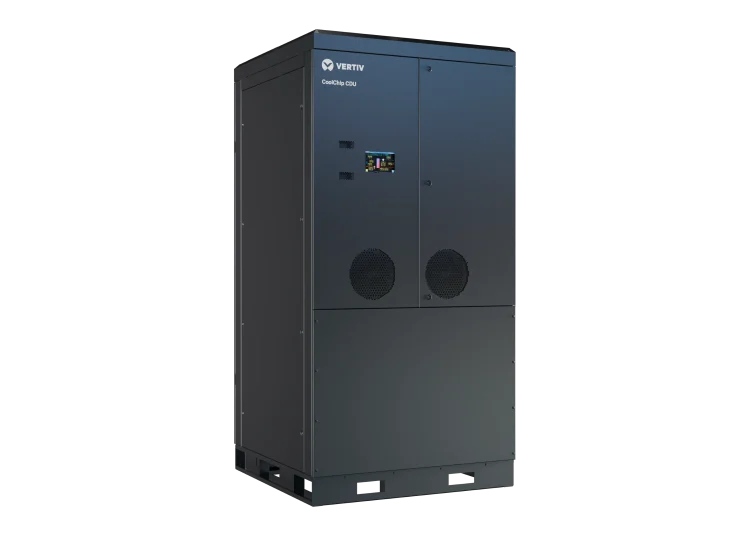
At COMPUTEX 2026, Vertiv showcased Vertiv SmartRun as both a physical infrastructure system and a configurable digital twin, enabling attendees to explore different configuration scenarios and understand how model-based design can support downstream planning, coordination, and simulation workflows.
Built using Dassault Systèmes’ model-based systems engineering on the 3DEXPERIENCE platform and integrated with NVIDIA Omniverse DSX workflows, the demonstrator provides a unified digital foundation for configuration, simulation, validation, and future optimization across the AI factory infrastructure lifecycle.