Malaysia’s AI momentum is getting hard to ignore, and Microsoft is building cloud capacity to match. Its Q2 2026 AI Diffusion Report puts generative AI use in Malaysia at 22.6%, second in Southeast Asia behind Singapore, and its 2026 Work Trend Index found that 69% of Malaysian AI users are producing work they couldn’t have done a year earlier. The next challenge, Microsoft says, is turning that energy into repeatable, company-wide results, which it calls Frontier Transformation. That means moving past isolated experiments by strengthening the cloud, data, security, and governance foundations needed to run AI responsibly at scale.
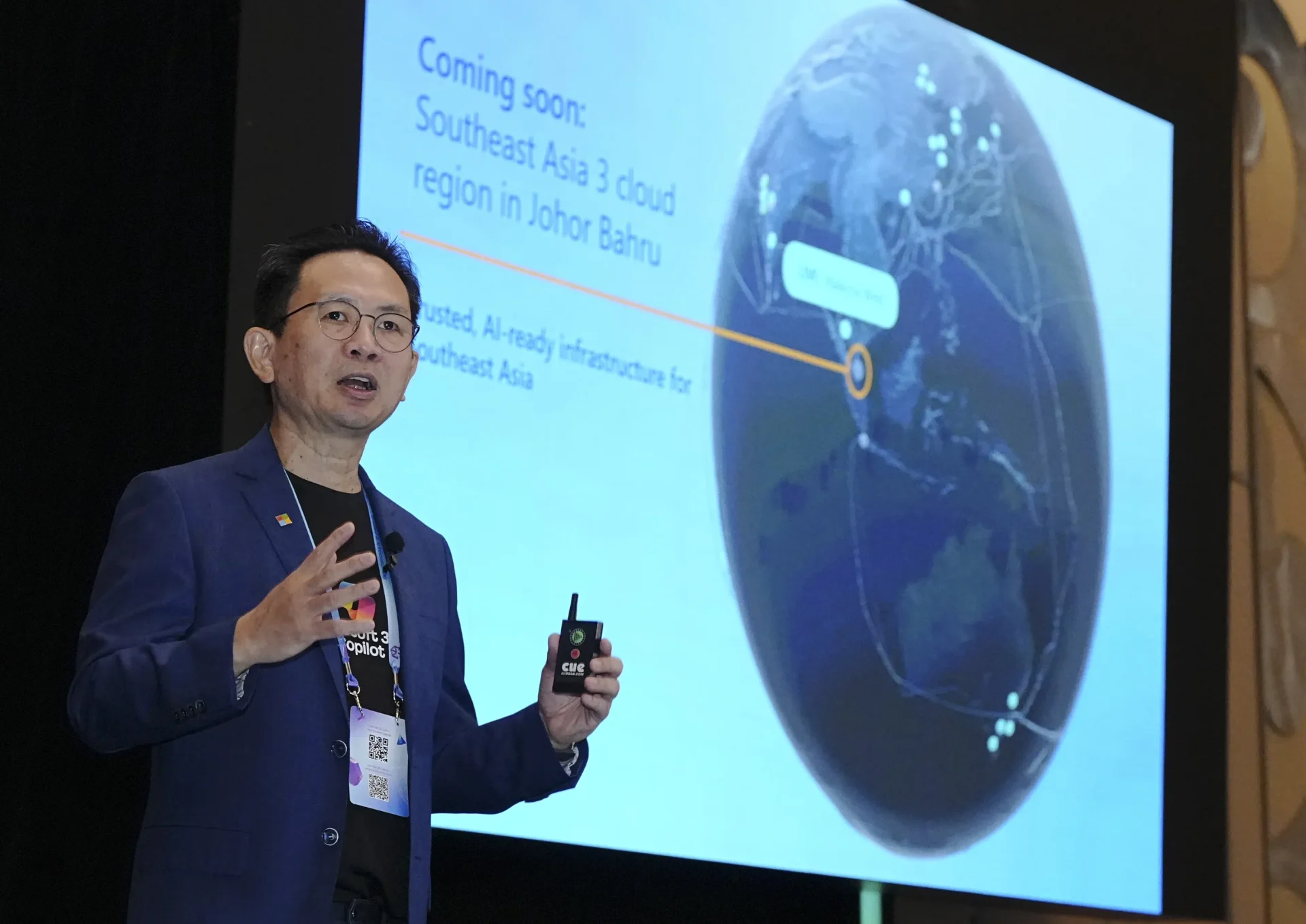
Part of that foundation is Southeast Asia 3, or SEA3, an upcoming AI-ready cloud region in Johor Bahru. It will be Microsoft’s second cloud region in Malaysia, joining Malaysia West in Greater Kuala Lumpur, and it’s set to grow into Microsoft’s largest cloud region in Southeast Asia. On the sustainability side, SEA3 will use closed-loop cooling and air-cooled chillers that eliminate water evaporation for cooling, which cuts reliance on local water resources. Backup generators will be designed to run on renewable biofuel to reduce net carbon emissions, and Microsoft-owned data centers will be built to at least LEED Gold certification.
Malaysia West has been live since May 2025 with three availability zones, offering lower latency and in-country data residency, and close to 200 services are now generally available there. Together, the two regions let organizations build architectures across two Malaysian cloud regions while tapping into Azure’s wider global footprint.
Microsoft is careful to say that multi-region isn’t right for every workload. For some applications, redundancy across availability zones within a single region gives the best balance of reliability, performance, cost, and simplicity. For mission-critical services or apps serving users spread across wide areas, spreading workloads across regions may justify the extra investment and complexity, with replication, traffic routing, application behavior, and failover designed around each workload.
For those cases, Microsoft points to three advantages. The first is resilience, since distributing workloads across regions helps services like online banking and public services stay available during outages or natural disasters, which limits the impact on revenue, regulatory exposure, and customer trust. The second is agility and performance, because product launches, seasonal peaks, and the growing use of AI agents can push demand past what one region handles, and multiple regions let teams place and scale workloads where capacity, services, performance, and cost fit best. The third is staying ready for change, as AI capabilities and expectations for storing and controlling sensitive data evolve quickly, and enterprise AI data governance is becoming a board-level priority.