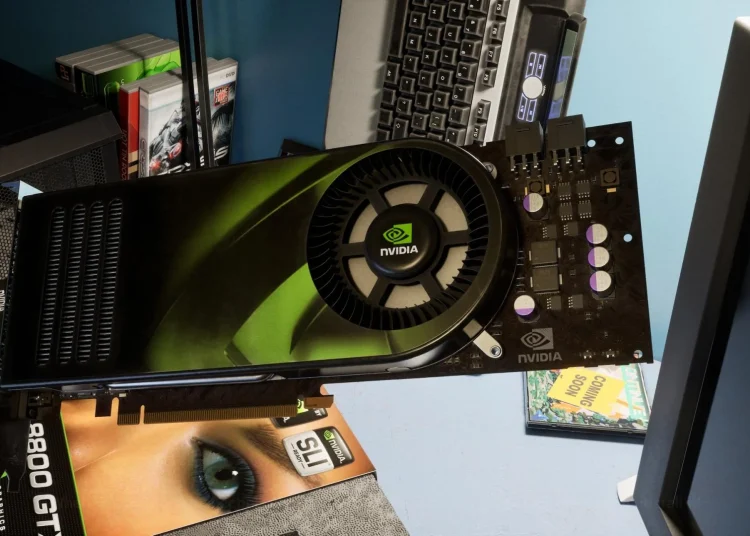
NVIDIA no doubt is the AI overlord in today’s age of AI where they basically hold the pickaxe to discover the immense volume of untapped AI potential. But back then, they were just a small company that believed that graphic processing needed to be done in a more efficient and parallel way to allow games to run smoother by offloading that load to this “add-in-module” called a graphics card.
So in 1999, the world met the very first Team Green GPU and in fact, the very first in the world – The NVIDIA GeForce 256.

This 25-year-old card was nothing to scoff at back then as it practically made Quake III Arena, one of the hottest competitive LAN titles at the time, run smoothly with graphic details such as realistic textures and dynamic lighting that was unlike any other titles, allowing casual gamers to dive fully into the surroundings while the competitive scene was guaranteed a responsive and lag-free gameplay.
As time went by, so many iterations, architectures, shifts in naming, and a load of interesting events have grown NVIDIA into a powerhouse within the gaming scene, leading to things like “You wanna play games? Get this NVIDIA card for your PC, plug in and enjoy” being the most common thing spoken by many DIY shop owners around the world.
The cards themselves also became more powerful down the line with greater rasterization capability and bigger VRAM for higher frame rates and greater visual fidelity while also including features that made online streaming accessible to anyone.

But then, the timeline shifted when NVIDIA came into contact with AlexNet, a CNN powered by specialized methodology for training AI using GPUs which was unheard of at the time. This led to Jensen believing its product could hold the key to a future where anything could become “possible” through AI. By doubling down on the bet on artificial intelligence, the brand has achieved many “world’s 1st” in terms of showcasing the potential of AI.

And who can forget the very donation of the first NVIDIA DGX-1 AI supercomputer to OpenAI to support the development of ChatGPT.
In terms of gaming, the debut of the GeForce RTX 20 series not only showcased that hyperrealistic lighting requires immense computing power but also AI as the “solution” to offload the exact “problem” Team Green themselves have “created”, thus leading to the creation of Deep Learning Super Sampling (DLSS) technique.
Since then, each major generational upgrade of the GeForce RTX family introduced even more AI-based features and processing techniques, making certain aspects like 4K gaming which was bonkers in 2015 now being the bread and butter for any mid to mid-high rigs in 2024. And that is only on the consumer side of things because, for developers and businesses, the next big thing is going to be NVIDIA ACE.
Despite yapping all of the strives and innovations of NVIDIA, we all still have to give the OG the credit it deserves with a well-mannered salute. GeForce 256, o7.