The PlayStation 5 jailbreak scene has taken a significant leap forward in recent weeks, opening the door to a wider range of homebrew applications, emulation projects and software modifications on Sony’s current-generation console. What was once largely the domain of dedicated security researchers and enthusiasts is now attracting mainstream attention, particularly after an unofficial storefront offering thousands of games went viral.
At the centre of this development is Relapse, a jailbreak released in late September 2026 that expands compatibility to a much broader range of PlayStation 5 consoles. The subsequent emergence of tools for running unofficial software, experimenting with alternative operating systems and accessing games outside Sony’s official ecosystem has reignited a familiar debate about console ownership, software piracy and the limits of digital rights.
For Sony, the situation presents an obvious security and commercial challenge. For the homebrew community, however, it represents an opportunity to explore hardware that has traditionally been locked behind tightly controlled software restrictions.
The question is whether this latest wave of jailbreaking will ultimately benefit the gaming community, undermine the PlayStation ecosystem, or do a little of both.

What Is the PS5 Jailbreak, and Why Is It Getting So Much Attention?
Jailbreaking refers to bypassing a device’s built-in software restrictions to gain access to functions and capabilities that are not normally available to users.
On the PlayStation 5, Sony uses multiple layers of security to prevent unauthorised software from running on the console. These protections help maintain the integrity of the operating system, enforce software licensing restrictions and protect the PlayStation Network from modified clients and potentially malicious software.
A jailbreak exploits weaknesses in those protections to gain a greater level of control over the system.
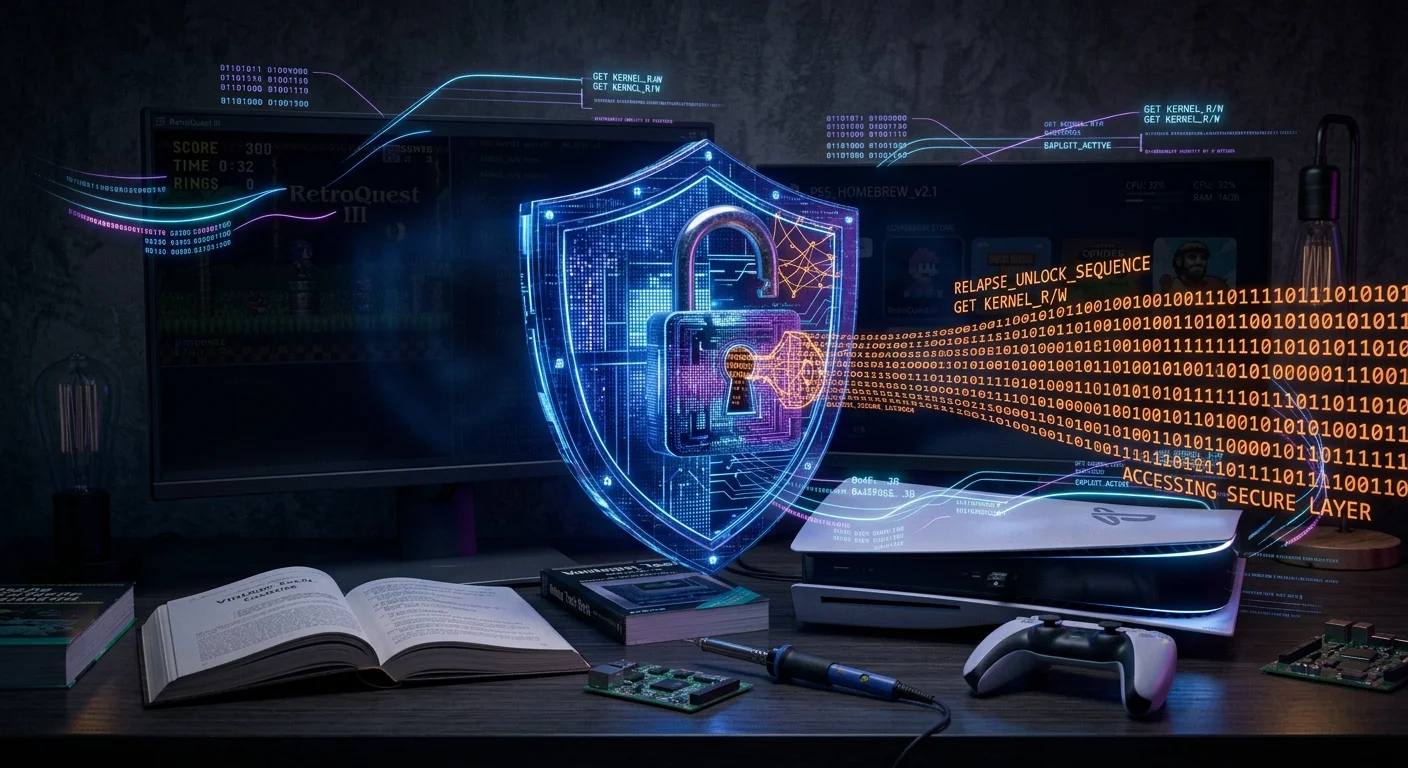
The latest wave of attention centres on Relapse, a publicly released exploit chain that supports PS5 firmware versions 7.00 through 13.60. According to reporting by Ars Technica and Tom’s Hardware, the exploit combines a browser vulnerability with a kernel-level vulnerability, allowing users to gain privileged access to the console and load additional code.
This is important because previous public jailbreak methods were generally restricted to older firmware versions. Many enthusiasts deliberately kept their consoles on outdated system software to preserve compatibility, while others had to search the second-hand market for consoles that had never been updated.
Relapse significantly expands the pool of potentially compatible hardware. It also supports the PS5 Pro, provided the console is running a compatible firmware version.
There is, however, an important limitation. Sony’s firmware 14.00 update closed the vulnerability used by Relapse, meaning consoles that have already been updated beyond the supported range cannot simply use the same method.
This creates the familiar dilemma associated with console jailbreaking: users must choose between maintaining an exploitable firmware version and benefiting from the latest official updates.
Beyond piracy: What can a jailbroken PS5 actually do?
The ability to run unauthorised code is not inherently the same as piracy. It also allows developers to experiment with applications that Sony does not officially support.
Some of the most notable possibilities include:
- Homebrew applications: Custom software created by independent developers, including file managers, utilities and system tools.
- Emulation: Running software designed for other gaming platforms, subject to the capabilities and limitations of each emulator.
- Game modifications: Experiments with frame rates, graphics settings and other aspects of compatible games.
- Alternative operating systems: Development efforts aimed at running Linux or Windows-related environments on PS5 hardware.
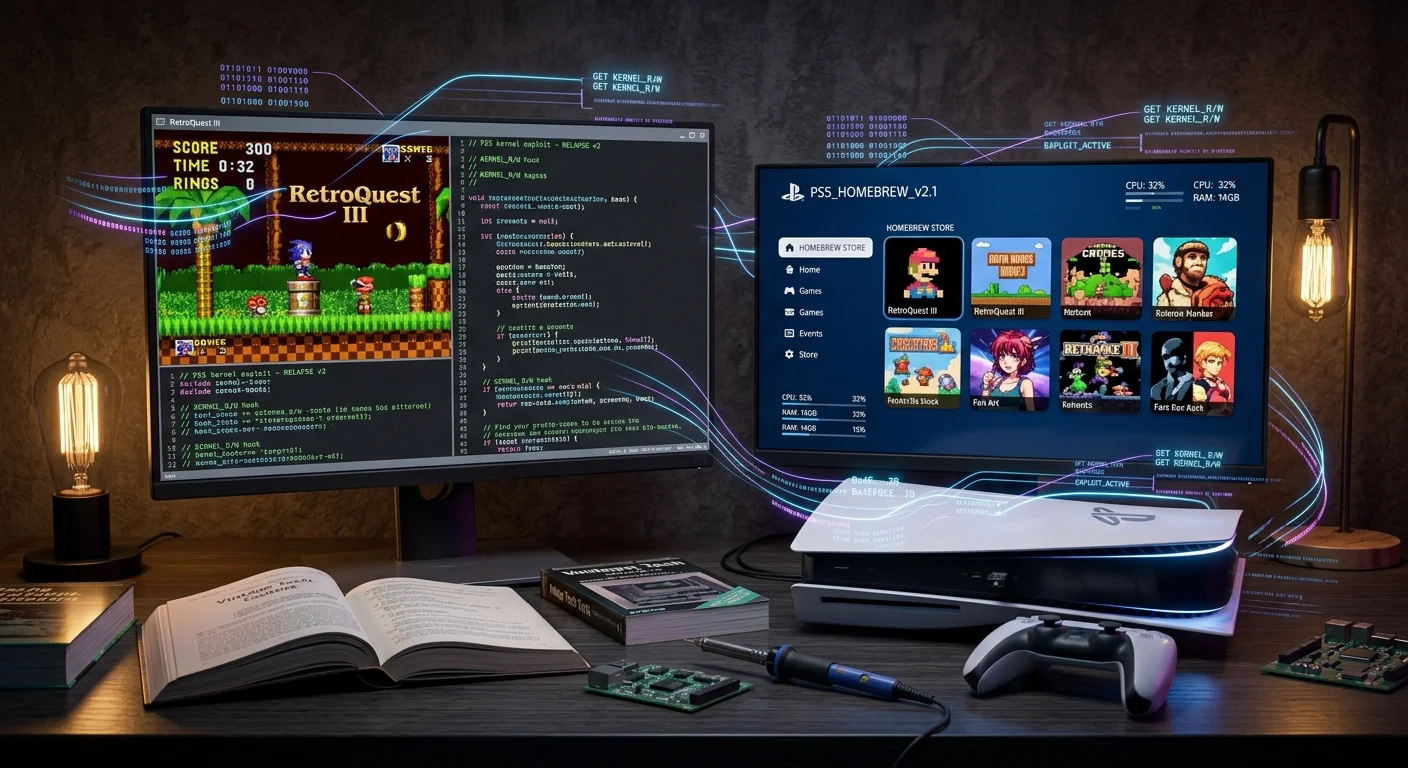
- Local computing and AI: Experiments that use the console’s CPU, GPU and memory for tasks beyond conventional gaming.
- Game backups: Research into preserving and running copies of games, although the legality of copying and executing particular titles depends on the circumstances and applicable law.
These possibilities explain why the jailbreak has generated interest beyond people seeking free games. The PS5 contains relatively powerful hardware, and opening it to alternative software offers developers a chance to explore capabilities that Sony does not expose through its normal consumer interface.
Recent projects have demonstrated Windows-related gaming experiments, emulation and local AI workloads on modified consoles. The results vary in maturity, compatibility and performance, so they should not be interpreted as evidence that every jailbroken PS5 can already function as a fully fledged gaming PC.
Sources: Windows Central, Tom’s Hardware.
The Overdrive Controversy: When Jailbreaking Meets Game Piracy
The jailbreak’s wider appeal became particularly apparent in October, following the appearance of Overdrive, an unofficial storefront that reportedly catalogued more than 1,600 PS4 and PS5 games for free download.
The project gained widespread attention after being promoted on social media, demonstrating how quickly a technical exploit can turn into a mainstream gaming controversy.
Unlike homebrew utilities, a storefront that directs users to unauthorised copies of commercial games raises a more direct copyright concern. It can make copyrighted software accessible without the permission of its owners, potentially depriving publishers and developers of legitimate sales.
According to reporting by TechSpot, the original Overdrive project disappeared from GitHub shortly after attracting attention. Reports suggested that the developer had received legal pressure from Sony, although the precise circumstances were not publicly confirmed by both parties. Cloned repositories subsequently appeared.
This episode illustrates the difference between developing a jailbreak and distributing pirated games. The former concerns the ability to run unauthorised code on a device. The latter can involve the reproduction and distribution of copyrighted material without permission.
The two activities can overlap, but they are not legally or ethically interchangeable.
It also demonstrates the difficulty of controlling a decentralised software community. Removing one repository does not necessarily eliminate the code, particularly when other users can copy, modify and redistribute it elsewhere.
What Does Sony Stand to Lose?
Sony’s concerns extend well beyond the possibility of a few players avoiding game purchases.
1. Potential lost software revenue
The most obvious risk is piracy.
Sony and third-party publishers earn revenue through the sale of games, downloadable content, subscriptions and other digital products. If players obtain unauthorised copies instead of purchasing legitimate releases, publishers may lose potential sales.
However, it is important not to assume that every pirated download represents a lost sale. Some users would never have purchased the game at its official price in the first place. The actual financial impact depends on how many users substitute pirated copies for legitimate purchases.
Nevertheless, an easily accessible piracy ecosystem could undermine confidence in the commercial protections surrounding PlayStation games.
2. Weakened control over the PlayStation ecosystem
The PS5 is not merely a gaming machine. It is also a platform through which Sony manages software distribution, licensing, updates, online services and its relationship with developers and publishers.
Jailbreaking weakens the company’s ability to determine which software runs on the console and how it behaves.
If unauthorised applications become increasingly accessible, Sony could face additional challenges involving cheating, account abuse, software tampering and attempts to circumvent platform restrictions.
These risks are especially relevant to multiplayer games and services in which fair play, account security and consistent software versions matter.
3. Increased security and maintenance costs
Every publicly disclosed exploit gives Sony another vulnerability to investigate, patch and monitor.
Security engineers must identify the underlying weaknesses, assess their impact and ensure that fixes do not introduce new problems. Sony may also need to update server-side checks and strengthen mechanisms that detect modified consoles.
Although security updates are a normal part of maintaining any software platform, a successful jailbreak can accelerate this work and consume resources that could otherwise be allocated to other projects.
4. Reduced control over the console’s long-term value proposition
Sony has invested heavily in its platform, including the PlayStation Store, subscription services and the software licensing model that underpins the business.
A console that can run applications from outside this ecosystem may appeal to consumers who want more freedom and flexibility.
If those capabilities become sufficiently accessible, Sony could face pressure to reconsider how it approaches homebrew development, backward compatibility and user control.
That does not mean jailbreaking will materially reduce PS5 sales. For some consumers, the ability to modify a console might even make the hardware more attractive. The larger concern is the potential impact on the software and services that generate revenue throughout the console’s lifetime.
What Does Sony Stand to Gain?
Although jailbreaking creates obvious risks, it can also offer useful lessons for Sony.
1. Stronger platform security
Public exploits reveal weaknesses that may otherwise remain undiscovered or unreported.
Sony can use the technical findings from security research to improve its software architecture, harden privileged components and strengthen protections against future attacks.
The benefit is not automatic, and it depends on how responsibly vulnerabilities are disclosed and how effectively Sony responds. Nevertheless, security research can contribute to a more resilient platform.
2. A clearer understanding of what enthusiasts want
The popularity of homebrew software demonstrates that a segment of the gaming community wants more control over its hardware.
This includes users interested in emulation, game preservation, custom software and alternative operating systems.
Sony is not obliged to support every modification, but the popularity of these projects offers useful feedback about areas where official support could improve the user experience.
For example, better backward compatibility, more comprehensive preservation options or officially supported developer environments could address some enthusiast interests without requiring users to bypass the console’s security.
3. Maintaining trust with developers and publishers
Responding to piracy and security vulnerabilities helps reassure commercial partners that Sony takes software protection seriously.
This is important because third-party publishers depend on platform security to protect their products and the integrity of their online services.
A failure to address widespread piracy could damage confidence in the platform, particularly if developers believe that unauthorised distribution is becoming easier to sustain.
The challenge for Sony is to enforce its protections without alienating legitimate customers who are interested in experimentation, preservation or accessibility.
What Does the Gaming Community Gain?
For the community, the benefits are more varied than simply obtaining games for free.
1. More freedom over purchased hardware
Many enthusiasts argue that buying a console should give them greater freedom to determine how they use the hardware, particularly when it is no longer covered by warranty or receiving meaningful support.
Jailbreaking allows developers to explore functions that are not available through Sony’s official software environment.
This does not automatically grant ownership of the copyrighted software installed on the console, but it can expand what technically capable users can do with the device itself.
2. A more versatile machine
A successful jailbreak can turn a console into a platform for experiments beyond its intended purpose.
Emulators, custom utilities, alternative operating systems and local computing projects can extend the useful capabilities of the hardware.
For enthusiasts, this makes the PS5 more interesting as a computing device, rather than limiting it to the software and services approved by Sony.
The practical benefits will depend on the maturity of each project, hardware access and firmware compatibility. Some applications may remain experimental or require considerable technical knowledge.
3. Better opportunities for preservation
Game preservation is another important argument in favour of broader access to console hardware.
Games can become difficult to access when digital storefronts close, online services disappear or older hardware becomes unreliable. Independent researchers may use modified systems to investigate how games function and develop ways to preserve software for the future.
However, preservation is not a blanket exemption from copyright law. The right to access a console’s internals does not necessarily grant the right to copy, distribute or download every game associated with it.
The strongest preservation efforts are those that distinguish legitimate archival work from unauthorised commercial distribution.
4. More opportunities for independent developers
A more open environment allows developers to test ideas that may never receive official platform support.
This can encourage experimentation with interfaces, utilities, emulators and alternative ways of using the console’s hardware.
It may also help researchers better understand the system’s architecture and contribute to the wider body of knowledge surrounding console security.
For these users, the jailbreak represents a technical achievement rather than a shortcut around game purchases.
What Does the Community Stand to Lose?
The benefits come with substantial trade-offs.
1. Losing access to new games and firmware updates
Firmware compatibility is one of the biggest practical limitations of the current jailbreak.
A console running supported firmware may be vulnerable to Relapse, while a console updated to a newer version may no longer be compatible.
This can create a difficult choice between keeping the jailbreak and accessing the latest official software.
New games may require newer firmware, and some updates may introduce important bug fixes, compatibility improvements or security patches. As the gap between supported and current firmware grows, maintaining a jailbreak could become increasingly restrictive.
2. Potential loss of PlayStation Network access
Sony’s PlayStation Network policies prohibit the use of unauthorised software to access or use PlayStation services and allow the company to restrict accounts or consoles when its terms are violated.
Users who modify their systems may therefore risk losing access to online features or facing account or console restrictions, depending on the circumstances and Sony’s enforcement decisions.
This is particularly significant for players who rely on digital purchases, online multiplayer, cloud saves or subscription services.
It is worth distinguishing a firmware update that blocks a jailbreak from an account or console suspension. They are different outcomes, and the precise consequences depend on the system’s status and Sony’s actions.
3. Increased exposure to malicious software
Unofficial applications and game repositories do not necessarily receive the same scrutiny as software distributed through established platforms.
Users may encounter modified files, malicious payloads, misleading downloads or applications that compromise their systems.
A jailbreak also requires users to place greater trust in the tools and instructions provided by independent developers.
This makes the source of the software important. The fact that an application is distributed within a homebrew community does not guarantee that it is safe.
4. Potential damage to legitimate developers
Piracy can reduce the revenue available to developers and publishers, especially smaller studios that depend on sales to fund future projects.
It is difficult to quantify how much damage a particular piracy service causes, and not every download represents a lost purchase. Even so, widespread unauthorised distribution can make it harder for developers to recover their costs.
This creates a tension within the broader community: the same tools that allow legitimate experimentation can also make copyright infringement easier.
5. A more hostile relationship with platform owners
When a jailbreak becomes closely associated with piracy, Sony has stronger incentives to restrict access, accelerate firmware patches and take legal action against services facilitating infringement.
Those responses can affect legitimate homebrew developers as well as people who distribute unauthorised game copies.
In other words, piracy can make the environment more difficult for the very enthusiasts who want to use the console for legitimate technical experimentation.
Is PS5 Jailbreaking Legal?
The legal position is more complicated than a simple yes-or-no answer.
Jailbreaking is not universally treated as either legal or illegal. The outcome depends on the jurisdiction, the technical measures involved, the purpose of the modification and what the user does after gaining access.
Several distinct issues need to be considered.
1. Modifying a console is not the same as pirating a game
The act of modifying a device, bypassing its security restrictions and running homebrew software raises different legal questions from downloading or distributing copyrighted games without permission.
A user who experiments with independently developed software is in a different position from someone who distributes commercial games without authorisation.
However, even a modification undertaken for personal use may raise questions about anti-circumvention laws, software licences or contractual restrictions.
It is therefore inaccurate to assume that a jailbreak is automatically legal simply because the user owns the physical console.
2. Copyright and anti-circumvention rules may apply
Many jurisdictions have copyright laws that prohibit unauthorised reproduction and distribution of protected works. Some also restrict the circumvention of technological protection measures used to control access to copyrighted software.
These rules can apply independently of whether a person makes money from the activity.
Exceptions may exist for particular circumstances, such as authorised security research, interoperability or certain preservation activities. Their scope varies by jurisdiction and does not necessarily extend to distributing commercial game libraries.
3. What about Malaysia?
For Malaysian users, the Copyright Act 1987 is an important part of the legal framework governing copyrighted software and unauthorised copying or distribution.
The specific legality of a PS5 jailbreak would require a closer examination of the relevant provisions, the nature of the circumvention and the user’s subsequent activities. It would be inappropriate to declare every jailbreak legal or illegal without that analysis.
Downloading or distributing unauthorised copies of commercial games raises a more direct copyright concern than merely running independently developed homebrew software. Whether a particular act infringes copyright or violates another legal provision depends on the facts.
Sony’s Malaysian PlayStation terms also prohibit circumventing encryption, security, digital rights management or authentication mechanisms connected with PlayStation and its content. The agreement permits Sony to restrict accounts, devices or services for certain violations, subject to applicable law.
That means a user may face consequences under Sony’s contractual rules even where the precise question of criminal liability is unresolved.
For reference, Sony’s published PlayStation Network Terms of Service for Malaysia sets out these restrictions and the company’s enforcement options.
This is a general explanation, not legal advice. Anyone considering a modification for research, preservation or commercial purposes should consult a qualified Malaysian lawyer if the legal consequences are important to their decision.
4. Can Sony take legal action against jailbreak developers?
Potentially, yes. The circumstances matter.
Sony may pursue action against parties involved in copyright infringement, unauthorised distribution of protected software or conduct that violates applicable anti-circumvention rules. It can also use contractual enforcement mechanisms where its terms permit.
The legal position of a developer who publishes an exploit is not necessarily identical to that of a person distributing copyrighted games through an unofficial storefront.
The distinction between security research, publishing technical information, creating circumvention tools and facilitating copyright infringement is important. Each may raise different legal questions, and the outcome depends on the applicable law and the specific facts.
The Bigger Picture: Who Really Wins?
The latest PS5 jailbreak is a reminder that even tightly controlled consumer hardware can be pushed beyond the limits envisioned by its manufacturer.
For Sony, the immediate challenge is to protect its platform, maintain the confidence of developers and publishers, and prevent security vulnerabilities from undermining its software ecosystem.
For the community, the opportunity is to explore the console’s hardware, experiment with alternative software and improve the long-term preservation of games and applications.
Neither side has an uncomplicated victory.
Sony can patch vulnerabilities, restrict unauthorised access and pursue services that facilitate piracy, but copied code and independent projects can be difficult to eliminate completely. Meanwhile, enthusiasts may gain new capabilities but sacrifice access to firmware updates, online services and newer games.
The distinction between legitimate homebrew development and piracy will remain central to the debate. Treating every jailbreaker as a pirate ignores the value of security research, preservation and independent software development. Conversely, treating every use of a jailbreak as harmless experimentation overlooks the consequences of distributing copyrighted games without permission.
Ultimately, the future of the PS5 jailbreak scene will depend on more than whether researchers can defeat Sony’s latest security measures. It will also depend on how responsibly the community uses that access, how Sony responds, and whether the interests of hardware owners, game developers and platform operators can be balanced more effectively.
The technology has opened new doors for the PS5. What happens next will determine whether those doors lead to a healthier homebrew ecosystem or a prolonged battle over control of the console.