For decades, the marketing machinery of the gaming industry has been fueled by a single obsession: raw power. From the early days of “bit” wars in the 1990s to the modern era of teratops and ray–tracing cores, consumers have been conditioned to believe that the quality of their experience is directly proportional to the specifications of their hardware. We are told that more RAM, faster clock speeds, and higher pixel counts are the holy grails of digital leisure. However, as we move deeper into the age of hyper–connectivity and global eSports, a silent truth has begun to emerge among professional players and technical enthusiasts alike: specifications are secondary to responsiveness.
In the world of online gaming, raw specs provide the “look” of the game, but latency provides the “feel.” A player can have a high–end liquid–cooled PC running a game at 8K resolution with ultra–settings, but if their network connection or input processing is sluggish, they are essentially driving a Ferrari through a swamp. Low latency has become the true differentiator between success and failure in the digital arena. This article explores the technical, psychological, and structural reasons why minimizing delay is more critical for the modern user than chasing the latest hardware milestones.
The Illusion of Perfection: Why High FPS Isn’t Everything
The most common metric for gaming performance is Frames Per Second (FPS). It is a seductive number because it is easy to measure and understand. A higher FPS usually results in smoother motion and more visual detail. Yet, high FPS can be deceptive if it is not accompanied by low system and network latency. If a game is rendering at 240 frames per second, but those frames are displaying information that is already 100 milliseconds old due to network lag, the visual fluidity is nothing more than an expensive illusion.
Several factors contribute to the “Specs Trap” that many users fall into:
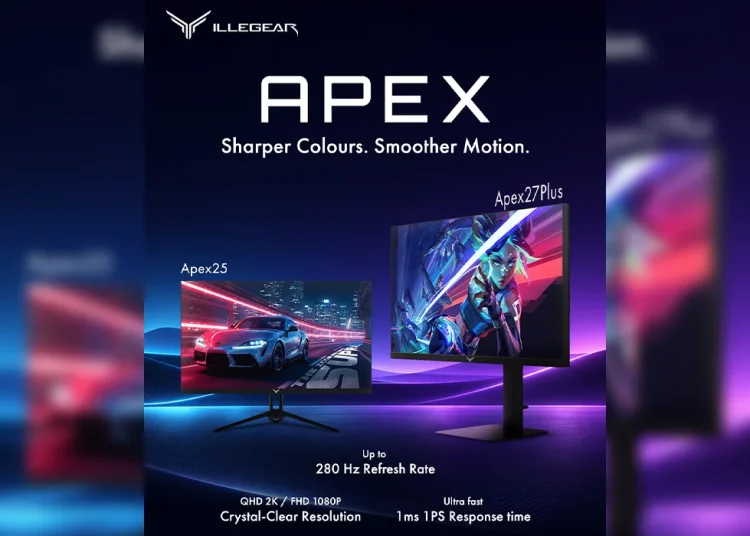
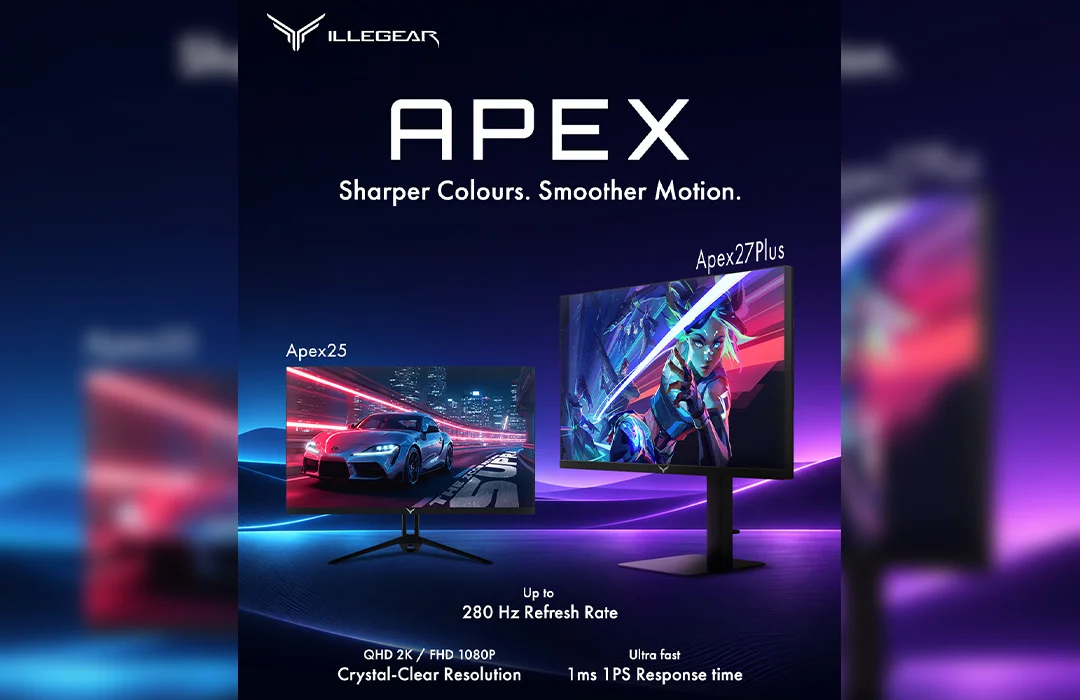
- Monitor Refresh Rates vs. Response Times: A 144Hz monitor is useless if the pixel response time is slow, leading to “ghosting” that obscures moving targets.
- Resolution Saturation: Beyond a certain point (usually 1440p or 4K depending on screen size), the human eye struggles to notice additional detail, making extra GPU power redundant.
- Thermal Throttling: Raw specs on paper often fail to account for how hardware performs after two hours of intense use when heat begins to slow down the processor.
- Overhead Waste: Many high–end systems spend excessive resources on background tasks or unoptimized effects that do not contribute to the core gameplay loop.
The reality of competitive play is that a stable, low–latency connection at 60 FPS will almost always outperform a jittery, high–latency connection at 200 FPS. When the game world reacts instantly to a player’s intent, the brain can enter a state of “flow” – a psychological condition where action and awareness merge. If there is a disconnect between the hand’s movement and the screen’s reaction, the brain must constantly work to compensate for the delay, leading to cognitive fatigue and decreased performance. This shift in understanding has led a new generation of players to prioritize network optimization and low–latency peripherals over the most expensive graphics cards.
Defining the Layers of Latency: The Millisecond War

To understand why latency is so dominant, one must look at it not as a single number, but as a chain of events. Every time a player clicks a mouse or moves a joystick, a signal must travel through several stages before it results in an action on the screen. This is often referred to as “End–to–End Latency.” In a competitive environment, every millisecond shaved off this chain provides a compounding advantage.
The components of this millisecond war can be categorized as follows:
- Input Latency: The time it takes for the peripheral (keyboard, mouse, controller) to register a physical movement and send that signal to the PC or console.
- Processing Latency: The time the CPU and GPU take to calculate the physics, game logic, and render the resulting frame.
- Network Latency (Ping): The time it takes for a data packet to travel from the user’s router to the game server and back again.
- Server Tick Rate: The frequency with which the server updates the game state; a low tick rate can make even a low–ping connection feel unresponsive.
- Display Latency: The time the monitor takes to receive the processed frame and physically illuminate the pixels.
When these layers are unoptimized, they create a cumulative delay that ruins the user’s “agency” within the digital world. For example, in a fast–paced shooter, a total latency of 150ms means the player is effectively playing in the past. They are aiming at where an opponent was, not where they are. This is why modern network technologies like Wi–Fi 7 and fiber optics are becoming more valuable than new GPUs. A player with a 10ms ping has a literal “time travel” advantage over a player with a 100ms ping, regardless of how many pixels the latter is rendering.
The Psychological Impact of Responsiveness
Beyond the competitive advantage, low latency has a profound effect on the user’s enjoyment and trust in a digital platform. Human perception is finely tuned to recognize delays in cause–and–effect relationships. When we flip a light switch, we expect the light to turn on instantly. If it takes half a second, it feels “wrong” or broken. The same principle applies to digital entertainment. A platform that feels “snappy” and responsive creates a sense of quality and reliability that raw graphics cannot substitute.
This demand for instantaneous feedback has reshaped the entire digital leisure industry. Users have become accustomed to the rapid feedback loops found in top–tier eSports and social media interfaces. Consequently, any platform that involves real–time interaction and high stakes must prioritize technical fluidity to retain users. For instance, an enthusiast looking for a premium experience might visit a site like Wincraft online casino, where the infrastructure is designed to handle thousands of concurrent interactions with minimal lag. In such environments, the “user experience” is defined by the smoothness of the transitions and the immediate execution of commands. If the interface were to stutter or the outcomes were delayed by network congestion, the sense of immersion and security would vanish instantly. This proves that for any high–fidelity digital hub, the invisible architecture of low latency is the foundation of brand reputation.
The feeling of “snappiness” is a subtle but powerful psychological hook. It conveys a sense of professional–grade engineering and respect for the user’s time. When a platform responds at the speed of thought, it builds a subconscious level of trust. Users are more likely to return to an environment that feels stable and responsive than one that is visually impressive but technically cumbersome. In the current attention economy, where a one–second delay in page loading can lead to a 10% drop in engagement, latency is no longer a technical detail – it is a core business metric.
Netcode and the Battle Against Physics
Since information cannot travel faster than the speed of light, developers face a constant battle against the laws of physics. To provide a smooth experience for players separated by thousands of miles, they utilize complex software solutions collectively known as “Netcode.” The quality of a game’s netcode is often more important than the quality of the player’s internet connection.
Modern netcode employs several techniques to mask the inevitable reality of latency:
- Client–Side Prediction: The game assumes the player’s movement will continue in the same direction and renders it instantly on the local screen, correcting it later if the server says otherwise.
- Lag Compensation: The server “rewinds” time to see if a shot hit a target based on where the player was at the time they fired, rather than where they are when the packet arrives.
- Interpolation: The game smooths out the movements of other players to prevent them from “teleporting” during minor packet loss.
- Rollback Netcode: Primarily used in fighting games, this system predicts inputs and “rolls back” the simulation only when a prediction error is detected, resulting in a near–lagless feel.
While these techniques are brilliant pieces of software engineering, they have their limits. Excessive lag compensation can lead to “getting shot behind walls,” a frustrating phenomenon where a player’s local reality doesn’t match the server’s truth. This further reinforces the idea that raw specs cannot save a poorly connected session. No amount of ray–tracing can fix a packet that arrives 300ms too late. Developers who invest in high–tick–rate servers and robust rollback systems are the ones who ultimately capture the competitive market, as they provide a fair and consistent field for all participants.
Cloud Gaming: The Ultimate Latency Challenge

The rise of cloud gaming platforms is perhaps the strongest argument for the supremacy of latency over raw specs. Services that stream games from remote servers effectively turn the user’s device into a simple video player. In this model, the user has zero raw specs locally – all the processing is done in a data center. The success of cloud gaming depends entirely on the ability to minimize the round–trip time of data.
Cloud gaming illustrates a new hierarchy of consumer needs:
- Connection Stability: Dropped packets in cloud gaming cause “macroblocking” and visual artifacts that are far more jarring than a lower resolution.
- Network Jitter: Variations in latency (jitter) are more disruptive than a high but consistent ping, as they prevent the brain from adjusting to the delay.
- Proximity to Data Centers: Physical distance to the server has become a more important factor for cloud gamers than the speed of their processor.
As fiber–optic internet becomes more common, the dream of “hardware–less” gaming becomes more viable. If a user can achieve sub–10ms latency to a nearby server, they can enjoy the equivalent of a $5,000 PC on a $50 streaming stick. In this scenario, raw specs are completely decoupled from the user’s hardware. The value moves entirely to the network. This shift will likely lead to a future where internet service providers (ISPs) offer “gaming tiers” that prioritize latency over raw bandwidth, recognizing that a stable 50Mbps connection is better for gaming than an unstable 1Gbps connection.
Conclusion: The New Standard of Excellence
As the digital entertainment landscape continues to evolve, our definition of quality must move past the superficiality of raw specifications. While a beautiful 4K image will always be appreciated, it is the invisible architecture of latency that dictates the long–term viability of a gaming experience. Whether you are competing in a professional eSports final, exploring a vast open world, or engaging with a high–stakes digital platform, your ability to interact with the environment in real–time is the ultimate luxury.
The industry is reaching a point of diminishing returns in terms of visual fidelity. The jump from 4K to 8K is nowhere near as impactful as the jump from 100ms to 20ms of latency. To truly appreciate the future of gaming, we must look beyond the box and toward the wires (or wireless signals) that connect us. Minimizing delay is not just a technical goal; it is a commitment to providing a seamless, fair, and immersive experience that respects the reflexes and instincts of the human user. In the millisecond war, those who prioritize responsiveness will always be the ones who stay ahead of the game.