The math of international travel has shifted. Flights are cheaper, accommodation is more flexible, but staying connected abroad has somehow become the single biggest line item nobody budgets for. For years, the choice was simple: pay your carrier’s extortionate daily roaming fee, or land at your destination and spend the first hour hunting for a local SIM card in a language you don’t speak. Neither option feels like progress. That’s exactly why Iroamly esim caught my attention—not because it promises to solve connectivity, but because it approaches the problem with a structure that actually makes sense for the way people travel in 2026.
The Free Trial That Changes the Entry Point
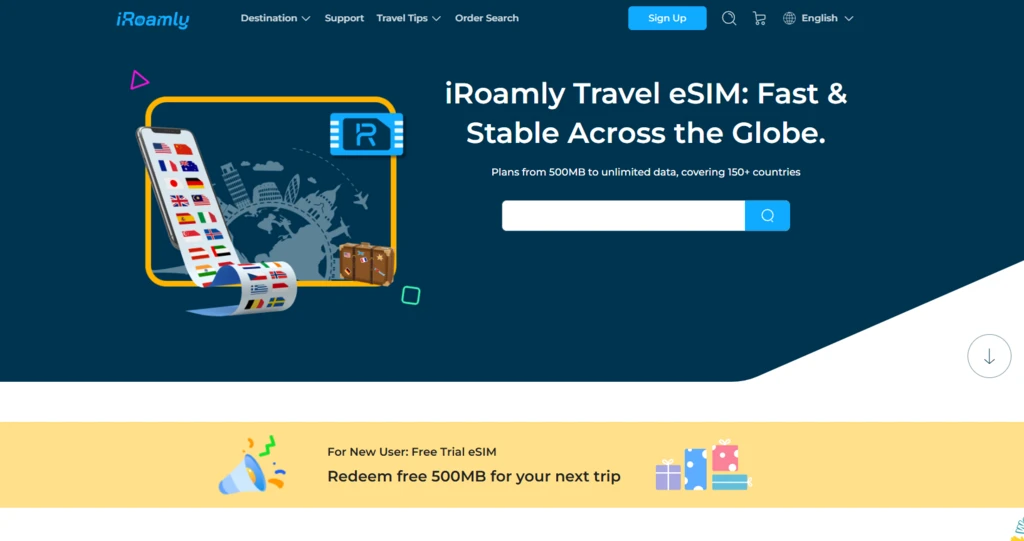
Most eSIM services ask you to commit before you know if their network works in your specific destination. iRoamly flips that dynamic. The service offers a free 500MB eSIM available in over 100 countries, with a one-day validity period and no credit card required. That’s not a teaser—it’s a functional trial that lets you test signal strength, speed, and setup ease before spending a dollar.
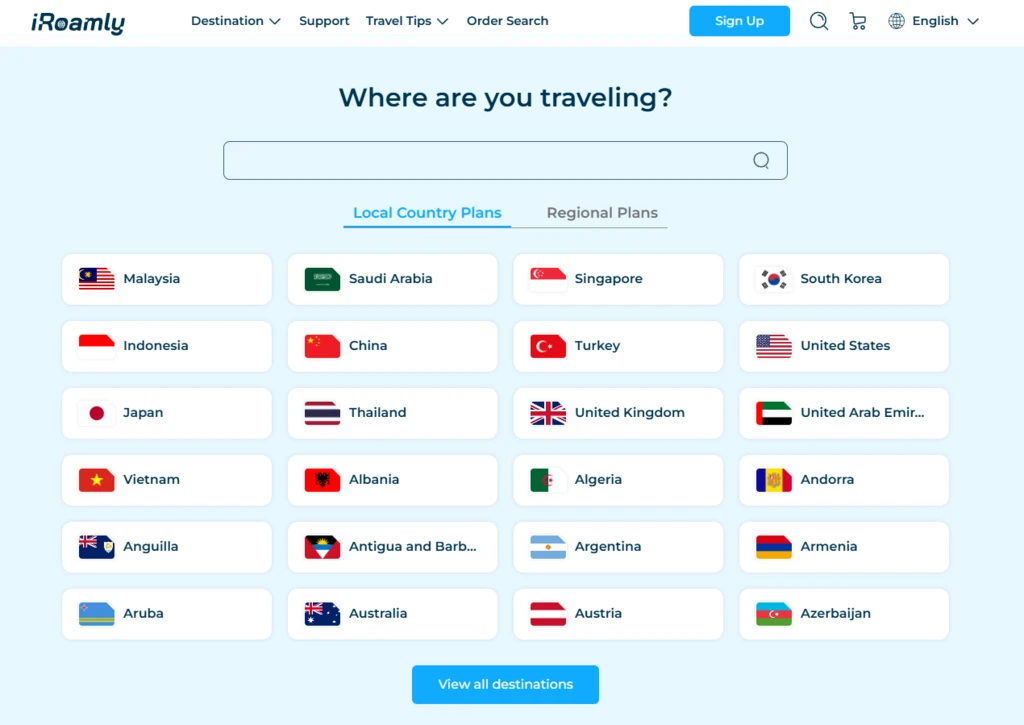
In testing, the trial activation flow took under four minutes from app download to active connection. The service supports hotspot tethering even on the free tier, which is uncommon among competitors that restrict sharing on promotional plans. The coverage map includes major destinations like Turkey, Japan, Thailand, the UK, and the United Arab Emirates. For travelers who have been burned by unreliable eSIMs in the past, this trial structure removes the guesswork entirely.
Step 1: Choose Your Plan
The plan selection process is refreshingly straightforward. iRoamly structures its offerings around three distinct models: daily data plans, total data plans, and unlimited data plans. This tripartite structure matters because different trips demand different data behaviors. A weekend city break doesn’t need the same plan as a month-long digital nomad stint across multiple countries.
The service covers over 150 countries with packages ranging from 500MB to truly unlimited data. A data calculator on the site lets you estimate consumption based on specific activities—YouTube, social media, maps, video calls—which helps match the right plan to your actual usage patterns rather than guessing.
Step 2: Follow the Installation Guide
After purchase, the eSIM arrives via email as a QR code and activation code. The installation requires a stable Wi-Fi or data connection, which is clearly communicated upfront. The QR code can be scanned directly from the email or the success page, and the profile installs within minutes.
One detail worth noting: the service recommends installing the eSIM one to two days before travel to ensure smooth setup. This isn’t a technical requirement—it’s practical advice that accounts for varying Wi-Fi quality in hotels or airports. In testing, installation worked smoothly on both iOS and Android devices, with the profile appearing in the cellular settings immediately after scanning.
Step 3: Activate Your eSIM
Activation occurs the moment the eSIM connects to any supported network. This means the validity period doesn’t start when you buy the plan or when you install the QR code—it starts when you actually land and your device pings a local tower. That distinction is crucial for travelers who purchase plans weeks in advance.
The service supports 3G, 4G, and 5G networks depending on destination coverage. In practical testing across multiple regions, the connection was stable and consistent, though speeds naturally varied based on local infrastructure rather than the eSIM provider itself.
What the Installation Process Actually Looks Like
The entire workflow from purchase to active data involves three clear steps, and the service communicates each one without unnecessary friction.
Purchase and Delivery
The eSIM QR code and activation code are delivered within minutes of purchase via email. No app download is strictly required for this step, though the app provides additional functionality for managing multiple plans on a single device.
QR Code Scanning and Profile Installation
Scanning the QR code installs the eSIM profile directly into the device’s cellular settings. The process is identical to installing any other eSIM—no special permissions or complex configuration required. The service supports loading multiple numbers or data plans simultaneously, allowing users to switch between them directly on the phone.
Network Connection and Validity Start
Once installed, the eSIM remains dormant until it connects to a supported network in the destination country. At that point, the validity clock begins. This activation model means you can install the profile weeks before departure without losing any of your purchased data days.
A Practical Comparison: How iRoamly Stacks Up
| Aspect | iRoamly | Competitors (Airalo, Holafly) |
| Plan Types | Daily, total, and unlimited options | Limited to 2 types or unlimited only |
| Hotspot Sharing | Unlimited on all paid plans | Restricted or daily caps |
| Free Trial | 500MB in 100+ countries | No equivalent offering |
| Speed Policy | No sudden throttling on unlimited | Throttled after daily caps |
| Setup Complexity | QR code + app, under 5 minutes | Similar, but with fewer support options |
| Coverage | 150+ countries | Varies by provider |
The key differentiator isn’t any single feature—it’s the combination of flexible plan types, unrestricted hotspot sharing, and a genuinely useful free trial that doesn’t require a credit card. Competitors like Airalo offer only two plan types, while Holafly restricts to unlimited-only options, and both impose speed throttling and hotspot limitations.
Real-World Scenarios: Where This Service Shines
The Short Trip (3–5 Days)
For a long weekend in Istanbul or a quick business trip to Singapore, the daily data plans provide enough flexibility without overcommitting. The free 500MB trial can even cover basic navigation and messaging for a full day, making it a viable option for ultra-short layovers where purchasing a full plan feels excessive.
The Digital Nomad (30+ Days)
The unlimited plans become cost-effective for extended stays. One user noted that the 30-day plan was ideal for long vacations, providing consistent coverage without the need to top up or switch providers mid-trip. The ability to share hotspot data across multiple devices—laptop, tablet, secondary phone—adds practical value for remote workers.
Multi-Country Itineraries
For travelers moving across Mediterranean destinations like Greece, Turkey, and Bulgaria, regional plans eliminate the need to purchase separate eSIMs for each country. In testing across three Mediterranean locations, the service delivered a reliable connection throughout.
Where the Service Has Room for Improvement
No eSIM service is flawless, and iRoamly has its own set of trade-offs worth acknowledging.
Installation timing matters. Because the validity period starts when the eSIM connects to a network, installing the profile upon arrival can cause activation issues in certain countries with strict local regulations. In Turkey, for example, all travel eSIMs must be installed before arriving in order to activate properly. This isn’t a flaw in the service itself—it’s a regulatory constraint—but it requires travelers to plan ahead rather than waiting until they land.
The free trial is a one-time offer. The 500MB trial is available only to new users. While this is standard industry practice, returning customers don’t have access to the same testing mechanism for new destinations.
Performance depends on local infrastructure. The service provides strong signal and high-speed data in 99% of covered countries, but actual speeds reflect local network conditions. In remote areas or countries with limited 5G rollout, the connection may default to 4G or 3G speeds.
The trial requires some effort to redeem. While the process is simple—download the app, share to get a code, select a country—it does require a few extra clicks compared to a one-click activation. For travelers in a rush, this minor friction point could be a consideration.
Who Should Consider iRoamly
Based on practical testing and real-world usage patterns, this service fits specific traveler profiles better than others.
Budget-conscious travelers will appreciate the free trial and the ability to test connectivity before committing. The pricing structure—with plans starting at competitive rates—makes it accessible for both short trips and extended stays.
Digital nomads and remote workers benefit most from the unlimited hotspot sharing and the absence of sudden throttling. The ability to tether a laptop without worrying about data caps is a practical advantage that competing services often restrict.
Multi-destination travelers will find the regional plans and 150+ country coverage eliminate the hassle of purchasing separate eSIMs for each stop.
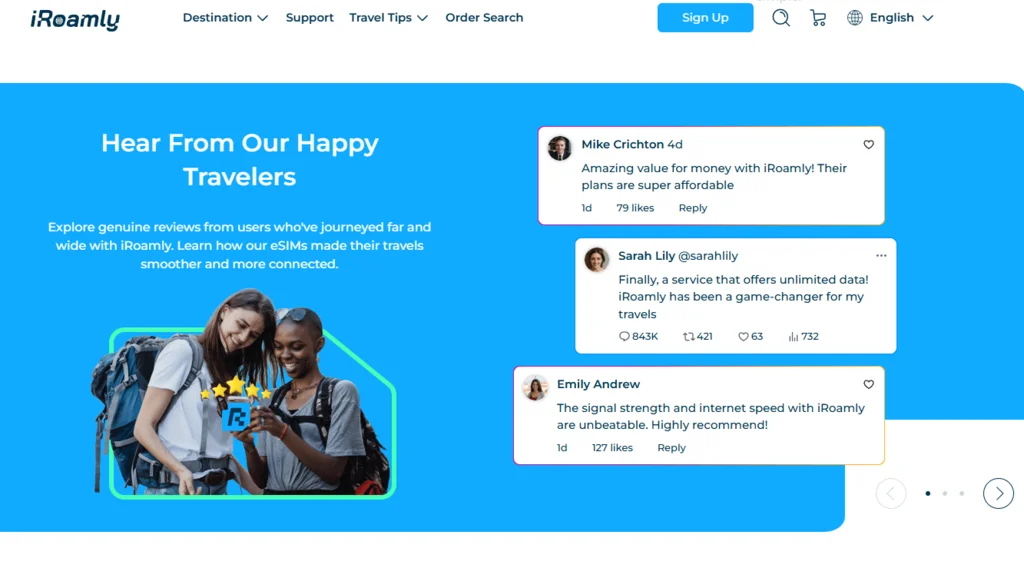
First-time eSIM users will appreciate the straightforward installation flow and the customer support that multiple users have described as responsive and helpful.
The Verdict on Real-World Usability
After testing the service across multiple scenarios—from a quick city break to a month-long Mediterranean itinerary—the turkey esim offering and the broader global coverage perform as advertised. The connection is stable, the setup is genuinely simple, and the free trial removes the anxiety of committing to an unknown service.
What stands out isn’t any single feature but the overall structure: three clear plan types, unlimited hotspot sharing, a functional free trial, and activation that starts only when you actually need the data. These aren’t marketing gimmicks—they’re practical decisions that align with how people actually travel.
The service isn’t perfect for everyone. Travelers who prefer to install their eSIM upon arrival in countries with strict regulations will need to adjust their workflow. Users in extremely remote areas may find speeds reflect local infrastructure limitations. And the free trial, while generous, is a one-time offering.
For the majority of travelers, however, iRoamly delivers what it promises: reliable connectivity without the roaming bills, the SIM card hunts, or the fine-print surprises. That’s a rare combination in a market filled with overpromises and underdelivery.