Google’s quantum computing department, Google Quantum AI has introduced Willow which has showcased unprecedented benchmarks and results that no one has ever seen to this day.

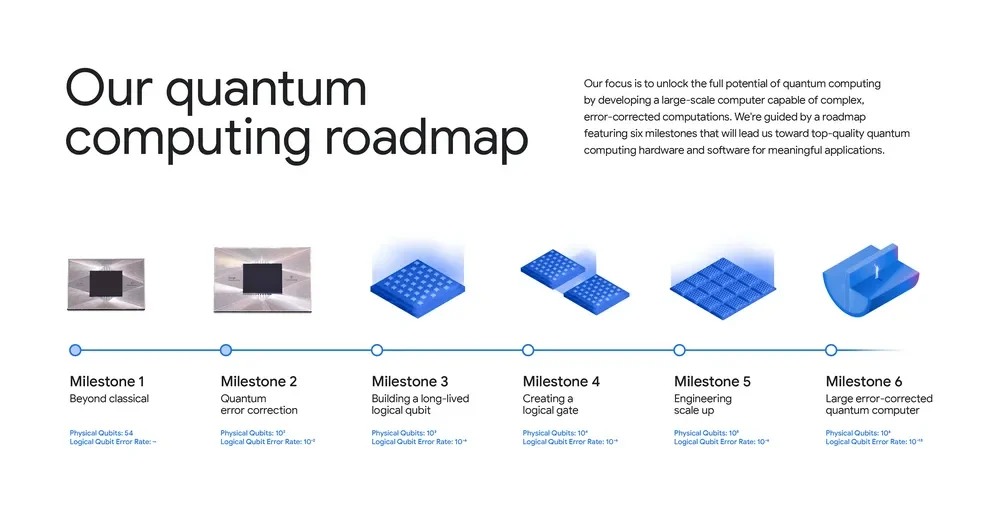
During the early days of quantum computing exploration, researchers and scientists often correlated the idea of “more qubits = more risks of errors” with official sources citing a nearly 3-decade stagnant. But Google’s team has flipped that concept around by exponentially reducing errors as more qubits are added, resulting in an enlarged grid size of encoded qubits from 3×3 or 5×5 to the now 7×7 formation.
With this, one can effectively scale qubit numbers to meet a certain degree of error correction capability as long as the end result is “good enough” for a given application. And thanks to its longer qubit lifetimes than any individual physical qubits, this has made Willow the most advanced chip and it could possibly be the “progenitor” of commercial-ready QC chips in the future.

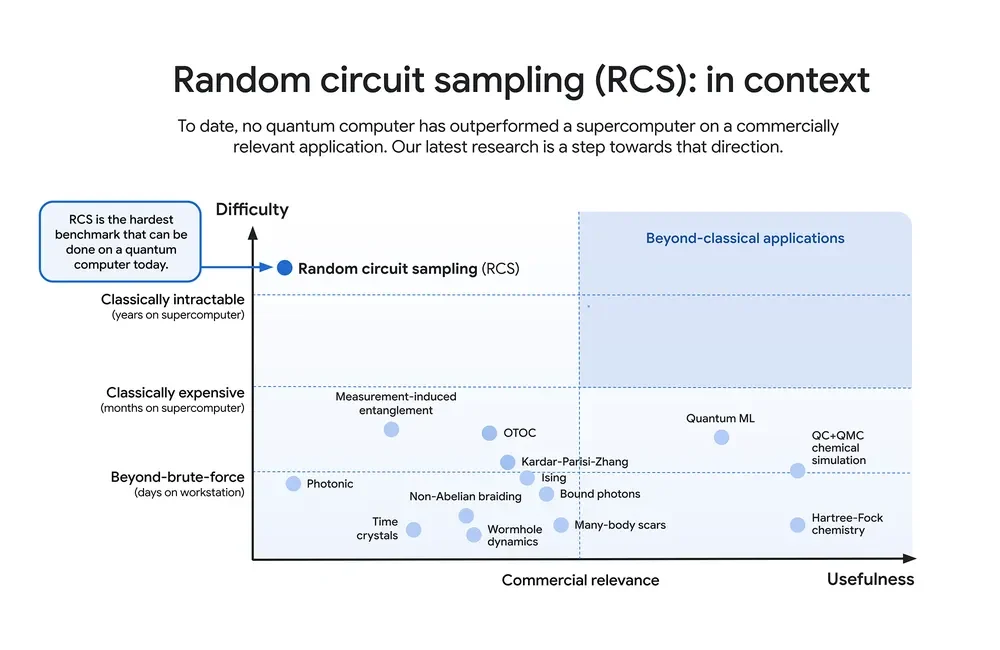
Located at Google’s dedicated quantum fabrication facility in Santa Barbara, the 105 high-quality qubits-equipped Willow also excels in the random circuit sampling (RCS) benchmark which is one of the bread-and-butter testing tools for measuring quantum computing performance. Using this benchmark, Willow completed a computation in under five minutes that would take one of today’s fastest supercomputers an estimated 10 septillion years, like, what.
Key performance metrics, such as T1 times measuring qubit lifetimes, show significant improvement, with lifetimes nearing 100 microseconds which is a 5x increase over previous chip generations. With this level of power, google is aiming to use this to offer tangible benefits in fields such as medicine, energy, and materials science. They also actively engage with the community through open-source tools and educational resources, including a Coursera course focused on quantum error correction. These initiatives aim to empower developers and researchers to contribute to algorithm development for future applications.
Google envisions future advanced AI systems to benefit significantly from quantum computational capabilities, particularly in tasks requiring vast data processing and modeling systems where quantum effects are crucial. For instance, we might be able to see the acceleration of new drug discovery, designing of efficient energy storage systems, and advancing fusion energy research. These game-changing developments promise to address some of humanity’s greatest challenges, unlocking possibilities that remain beyond the reach of classical computers.