Choosing an extension cord can be tricky when your electrical outlet is far from the equipment you need to power. A short cord may not reach, while an unnecessarily long one can create clutter and increase voltage drop. The wrong choice may also affect equipment performance and electrical safety.
You can avoid these problems by measuring your setup and checking your equipment’s power requirements before buying a cord. The right choice should provide enough reach without leaving excessive cable on the floor. You also need to consider wire gauge, amperage, and the environment where you plan to use the cord.
Whether you are powering household appliances, workshop tools, or outdoor equipment, a few practical steps can help you select a suitable cord.
1. Measure Distance from Outlet to Equipment
Start by measuring the distance between your electrical outlet and the equipment you want to power. Measure along the actual route rather than estimating the straight-line distance. Include corners, furniture, workbenches, and other obstacles that may affect cord placement.
For example, a workshop tool may sit several feet away from the nearest outlet. A direct measurement may not account for the distance around a workbench or other equipment. Browse the extension cord collection to compare different lengths and find an option that suits your setup.
Leave some room for maneuverability. If a cable is very tight, it will tend to pull at the plug or outlet when moving your equipment around. On the other hand, do not give yourself too much cable because this may cause tripping hazards.
2. Match Cord Length with Wire Gauge

Cord length affects electrical performance because longer conductors create more resistance. As current travels through the cable, some voltage is lost. This is known as voltage drop. The effect becomes more noticeable when you use a long cord with equipment that draws substantial current.
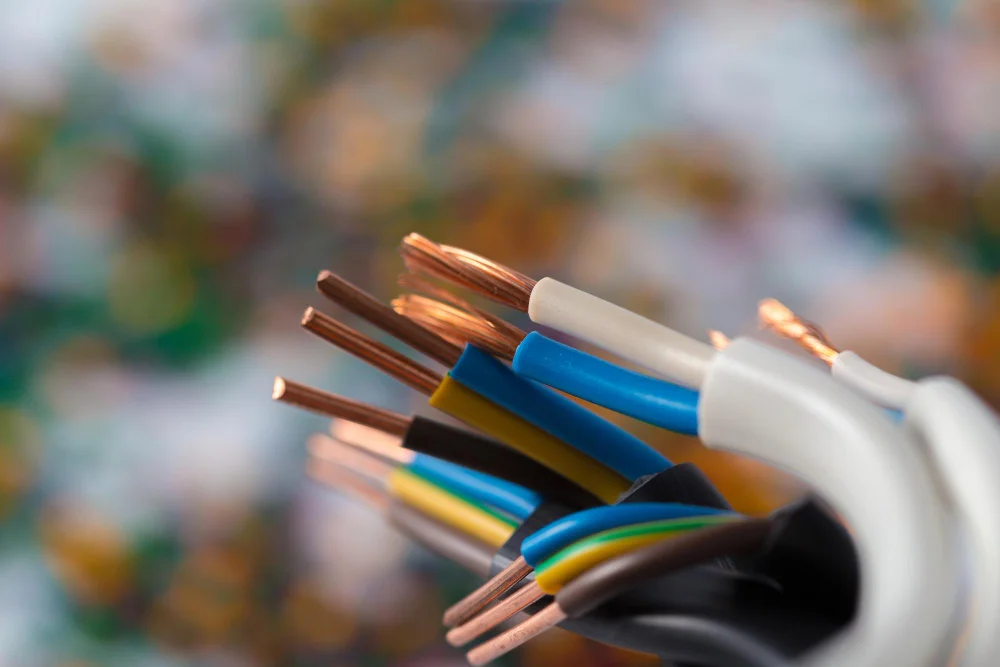
Wire gauge also matters. In the American Wire Gauge (AWG) system, a lower number represents a thicker conductor. For example, a 12-gauge cord has thicker conductors than a 14-gauge cord of the same construction. Thicker conductors generally offer less resistance and can help reduce voltage drop over longer distances.
Moreover, consider a power tool that will have a high electrical load. If the cord is long and thin, there will be too much voltage drop and heat generation. It would be better to use a short and thick wire. Remember to compare the ratings of both the cord and equipment you are using.
3. Check Equipment Power Requirements
Different machines require varying amounts of electricity. A lamp will require less electricity than a table saw, an air compressor, or a space heater. The choice of the extension cords should be based on the electricity needs of the machine and not just the distance to the socket.
Check the specifications on the product label or manual to know the watts, amps, and voltage of your electronic device. For instance, an electronic item rated at 1,500 watts running on 120 volts will use up to 12.5 amps. Your extension cord should be able to accommodate such an amp draw.
Also consider equipment with electric motors. Power tools and compressors may draw additional current when they start. This starting demand can affect cord selection. Check the manufacturer’s recommendations and choose a cord with suitable electrical ratings for both the application and operating conditions.
4. Consider Environment and Cord Placement
Your work environment also affects the length and type of cord you need. Indoor setups may have fewer obstacles, while outdoor projects often require longer routes around vehicles, landscaping, and work areas. Measure the full route and plan where the cable will run before purchasing a cord.
Check the jacket rating before using an extension cord outdoors. Outdoor-rated cords have insulation designed for exposure to environmental conditions. For example, SJTW cords use a thermoplastic jacket and are designed for outdoor applications. However, always check the manufacturer’s specifications for the exact conditions permitted.
Plan the cord route to keep it away from sharp edges, hot surfaces, water, and areas with heavy foot or vehicle traffic. Avoid covering extension cords with rugs or placing them where heat cannot escape. Uncoil the cord fully during use, especially when powering equipment with a high electrical load. Proper placement helps reduce overheating and physical damage.
5. Compare Cord Specifications Before Purchase
Once you know the required length and power demand, compare available cord specifications. Check the AWG size, amperage rating, voltage rating, jacket type, and connector configuration. Make sure the plug and receptacle match your equipment and electrical outlet.
Common configurations include 14/3, 12/3, and 10/3 extension cords. The first number identifies the wire gauge, while the second indicates the number of conductors. A 12/3 cord has three conductors, including a grounding conductor, with 12 AWG wire. A 10/3 cord uses thicker 10 AWG conductors. However, the permitted load depends on the complete cord construction, connectors, and manufacturer’s rating.
Look for recognized safety certifications and clear product specifications rather than choosing based on price alone. If standard lengths or configurations do not meet your requirements, consider custom options. Americord offers different cord lengths and wire gauges, making it easier to compare products for residential, commercial, and industrial applications.
Conclusion
Choosing the right extension cord length involves more than measuring the distance from your outlet. You must also consider equipment power demand, wire gauge, voltage drop, and the environment where you plan to use the cord. A longer cord may offer greater reach, but the conductor size and electrical ratings must support the connected equipment.
Before purchasing, measure your cable route and check your equipment’s specifications. Compare those details with the cord’s rated capacity and intended use. These simple checks can help you avoid unnecessary cable length and create a safer, more reliable power connection.